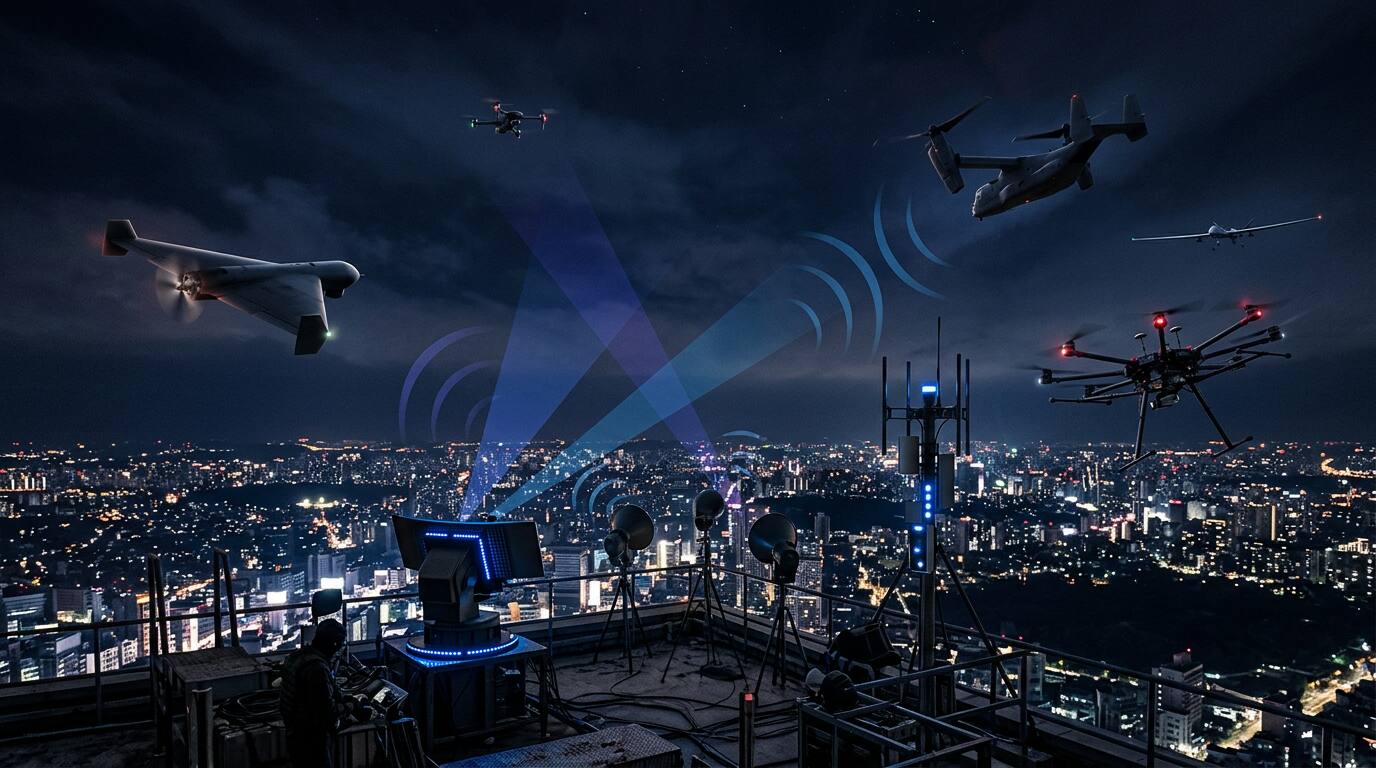
Every sensor has blind spots
RF sensors cannot hear autonomous drones, radar struggles with birds and clutter, and cameras need to be cued. Coverage needs distinct technologies, not more of the same.
Select the areas you need to protect, choose how drones should be detected and neutralized, and let the optimizer place real, catalogued systems for the best coverage per dollar. Then launch a simulated raid and watch whether the design stops it.
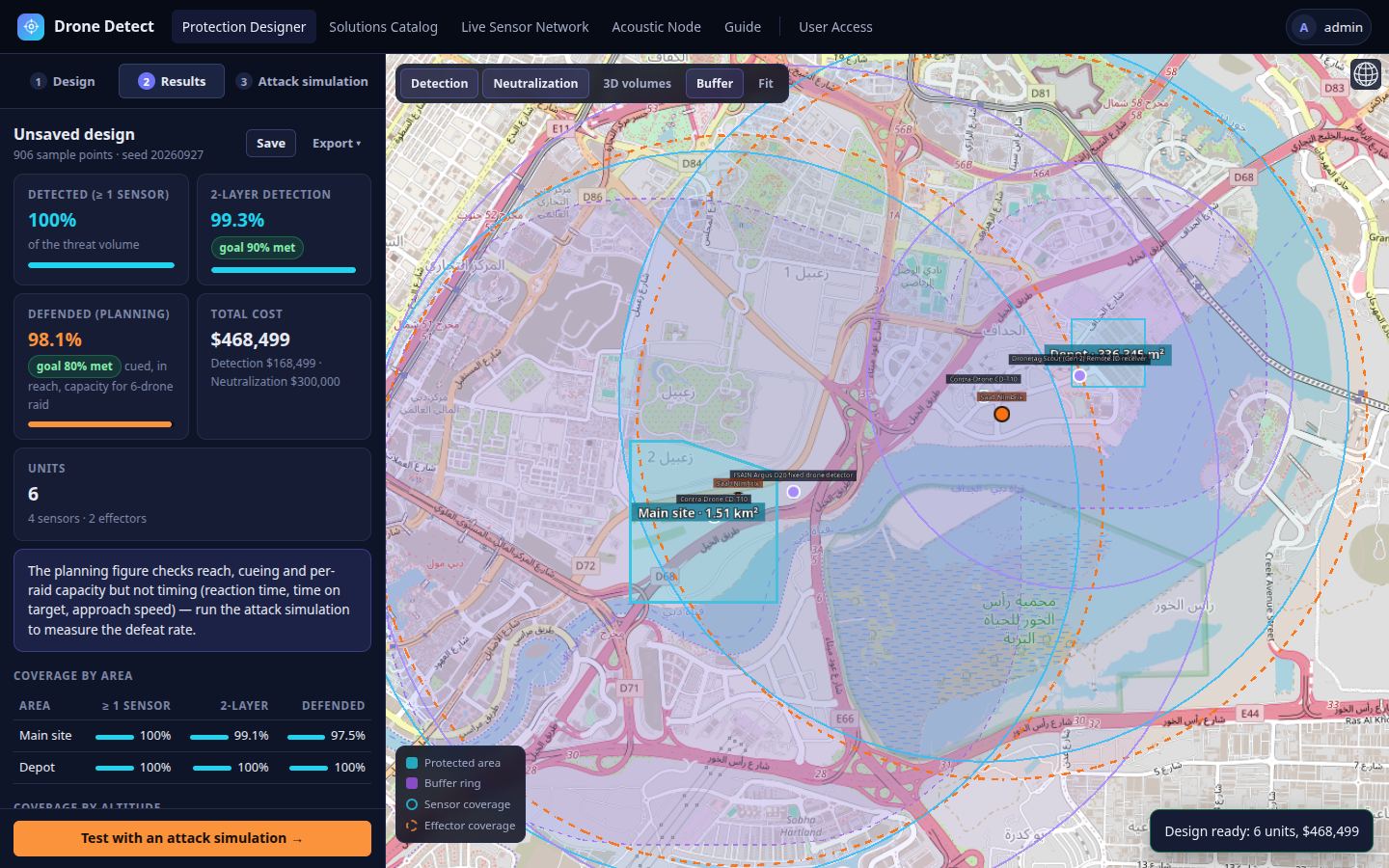
Buying decisions are often made from brochure ranges, one technology at a time. Real attacks combine autonomous drones that emit no radio signal, several drones at once, and approach paths nobody planned for.
RF sensors cannot hear autonomous drones, radar struggles with birds and clutter, and cameras need to be cued. Coverage needs distinct technologies, not more of the same.
Effectors must be in reach, cued in time, and have enough channels and magazine to handle a raid, not just a single intruder.
Vendor "up to" figures are rarely achieved against small drones. Plans should be built on sourced, derated data and tested before money is spent.
One workflow combines detection and neutralization, optimizes where every unit goes, and validates the result against randomized attacks.
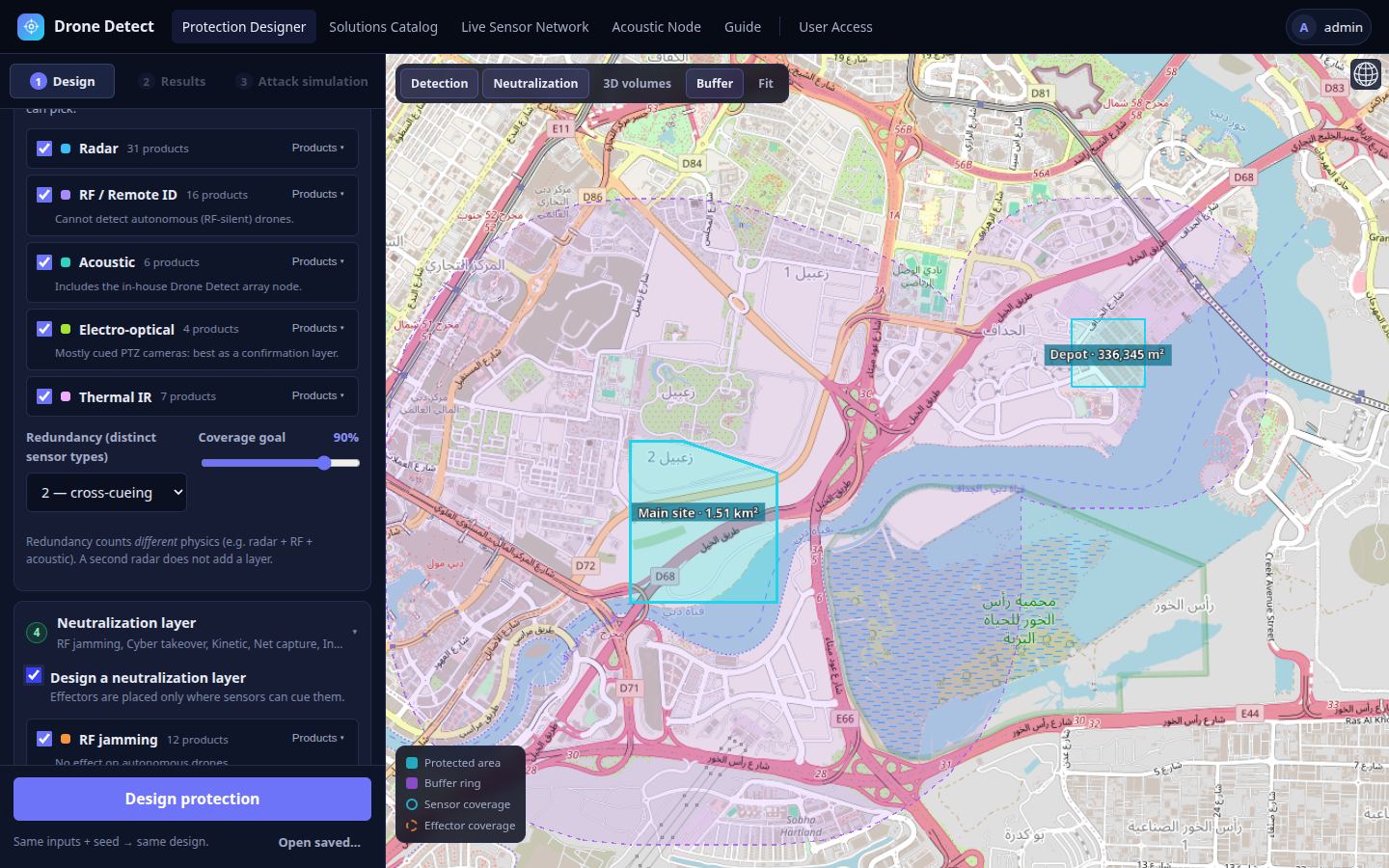
Draw one or more sites on the map: a plant, an airport apron, a stadium, a border post. Set a buffer ring for early warning, the altitude ceiling, the drone classes you face, the share of autonomous drones and the expected raid size.
Pick the technologies you are allowed to use, for example radar, RF, acoustic, EO/IR, jamming, interceptors or directed energy, and optionally restrict them to specific products. Set the redundancy: how many distinct sensor and effector types must cover every point.
The optimizer places and orients units to reach your coverage goals within budget, balancing performance against cost. An effector only counts where it can be cued and has the capacity to absorb the raid. Results show coverage by area and altitude, cost, and every unit's contribution.
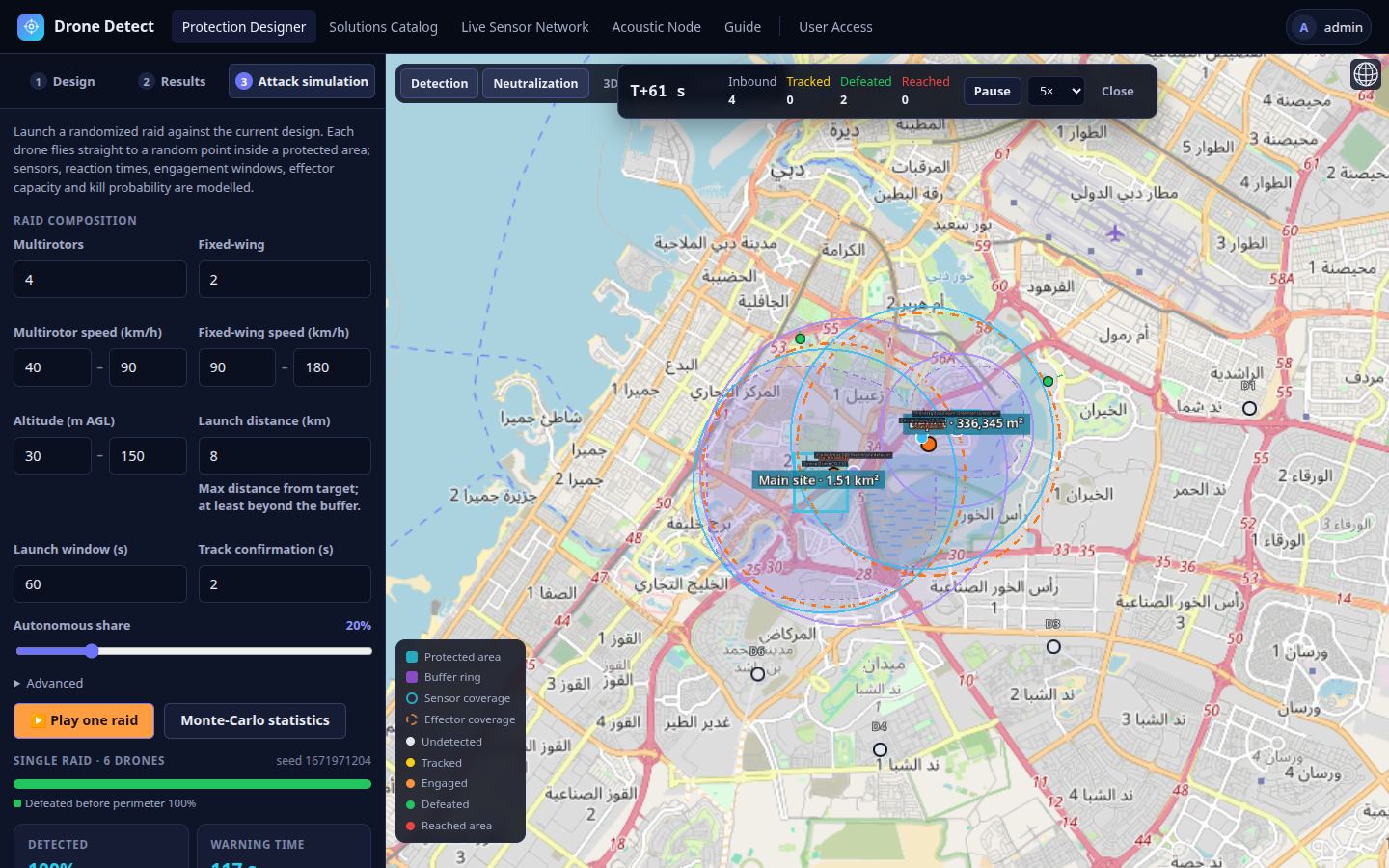
Launch a randomized raid of multirotor and fixed-wing drones. Each drone runs the full kill chain: detection, track confirmation, effector reaction, engagement time and probability of kill, with channels and magazines that can saturate. Monte-Carlo runs give defeat rates with confidence intervals.
Every detection sensor and effector the optimizer can choose is a commercially available product with standardized specifications and public sources.

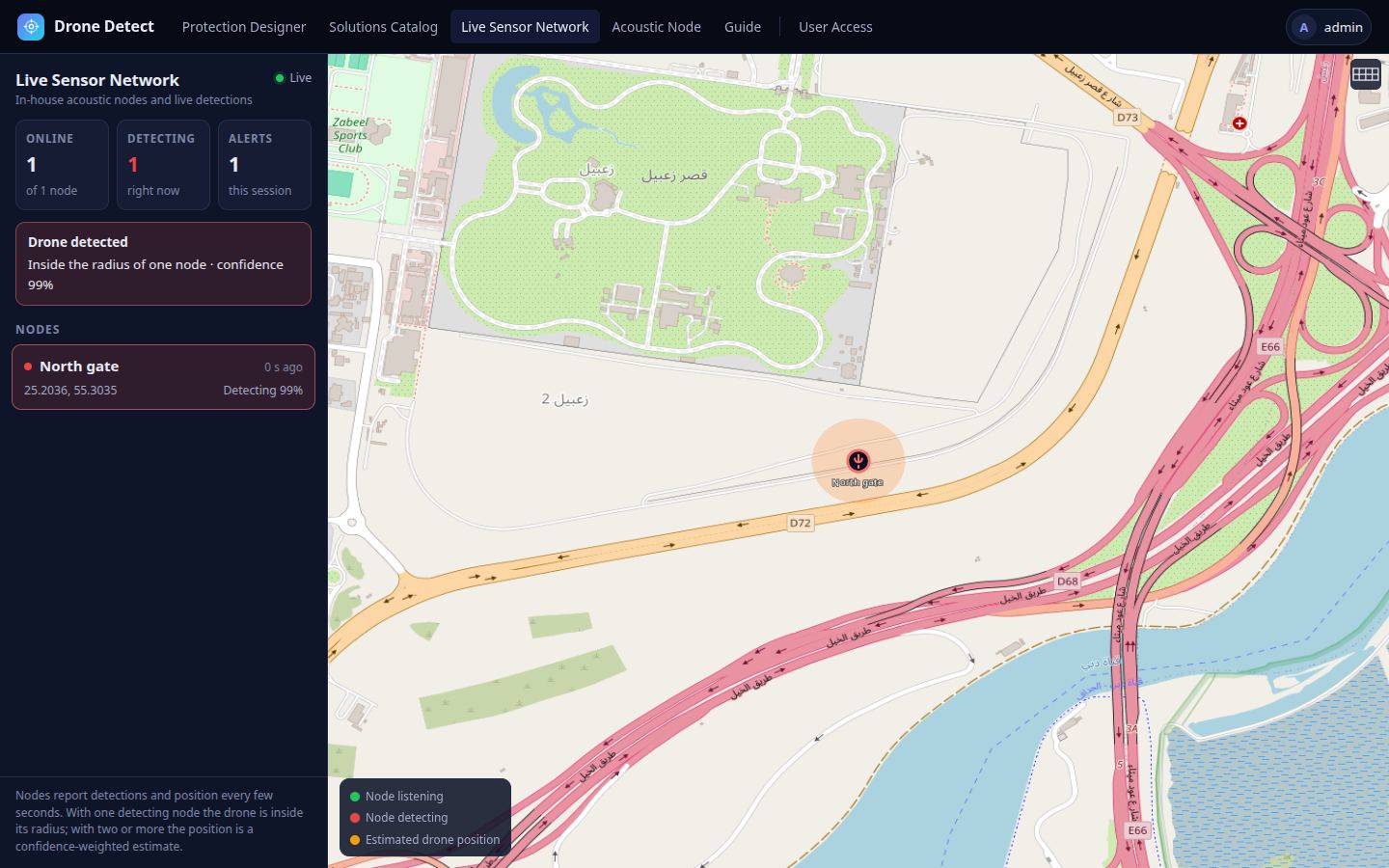
Our own sensor detects drones from the sound they make. Directional microphone arrays are distributed across the protected area and together form a listening network that covers the close-in gaps other sensors leave, including autonomous drones that emit no radio signal.
Directional microphone arrays pick up the tonal signature of rotors and motors while rejecting sound from other directions.
A machine-learning model runs on every node and scores each second of audio, with a tunable threshold for the local noise environment.
Nodes report detections, confidence and position; several detecting nodes give a confidence-weighted position estimate.
Operators see every node and every detection live on the Sensor Network map, ready to cue cameras or effectors.
Tell us what you need to protect. We can walk you through a design for your site, discuss an acoustic network deployment, or arrange access to the platform.
Already have an account? Sign in. Need one? Request access and an administrator will review it.